
Diabetes: A life-saving calculation tool
- Share on Facebook
- Share on Telegram
- Share on LinkedIn
- Share on Twitter
- Copy link
Page url is copied
In many low-resource countries, insulin-dependent diabetes remains a daily challenge for healthcare providers and a life-threatening condition for patients. One of its most serious complications, diabetic ketoacidosis, occurs when the body lacks insulin and uses fat for energy, leading to a dangerous blood pH imbalance. This complication requires rapid and precise management. However, the shortage of qualified endocrinology professionals and the limited availability of laboratory tests make treatment particularly difficult.
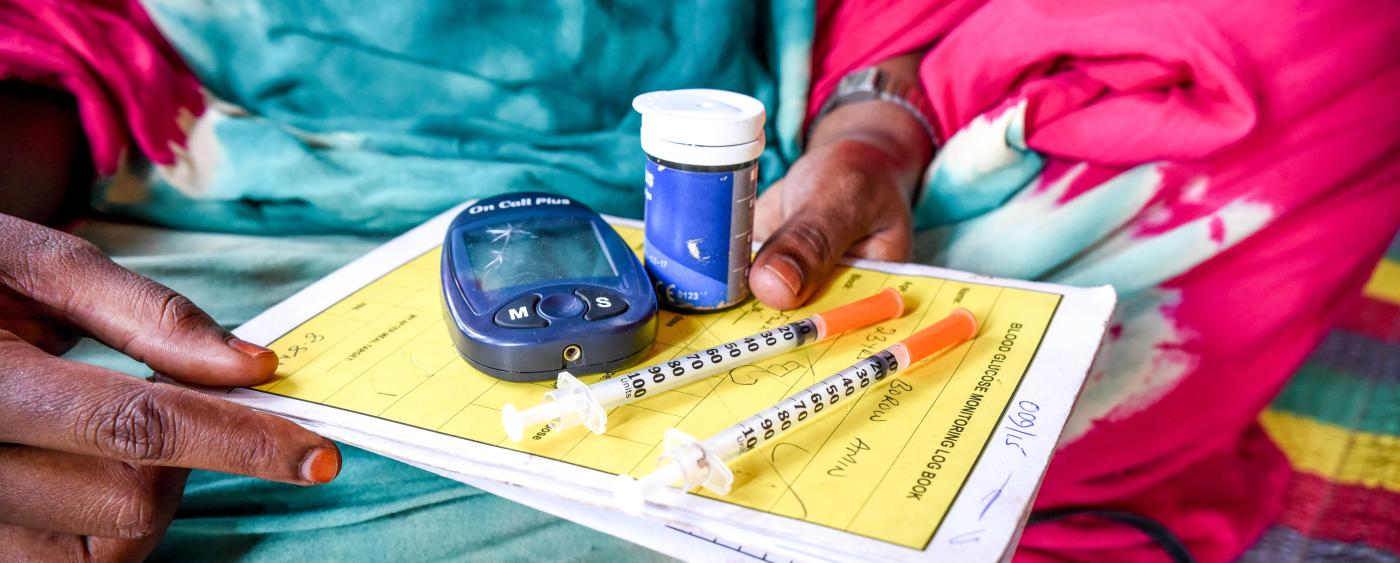
In areas where Médecins Sans Frontières operates, the situation is striking: in Aweil, South Sudan, around thirty children with type 1 diabetes are hospitalized in intensive care each month due to episodes of ketoacidosis. Some even return multiple times per month. This situation results from particularly complex care challenges in the region, linked to the lack of access to essential treatments such as insulin and devices for monitoring blood sugar at home.
An Existing Tool
At the beginning of 2025, the MSF Foundation launched an exploratory project to identify solutions that could facilitate the management of diabetic ketoacidosis in the field. This led to the discovery of the work of Dr. Dan Leach, a British pediatrician who developed an online calculation tool that accurately determines fluid and insulin doses to support medical management in the treatment of diabetic ketoacidosis.
This tool, recognized by the British Society for Paediatric Endocrinology and Diabetes, is already in use in the United Kingdom. Its main advantage is simplicity: the healthcare worker enters the patient’s clinical and biological parameters, and the algorithm —based on standard medical protocols— calculates the appropriate doses of the main components of the treatment.
Adapting Innovation to Field Realities
However, in MSF intervention contexts, constraints are numerous: specialized equipment is often lacking, and several biological data points required for calculations are not available. Under these conditions, the tool cannot be used as is.
To address these challenges, the Foundation’s work has been structured around several complementary areas:
- Adapting the tool to MSF’s specific treatment protocols;
- Simplifying the required parameters, so that the calculator can be used even with limited data, taking into account technical and material constraints;
- Identifying and improving access to portable measurement devices capable of providing essential data in the field, such as ketone levels responsible for blood acidification.
The next step will be to evaluate how medical teams use this tool. A pilot phase is planned in South Sudan in the coming months.
An Approach of Agility and Collaboration
This project reflects the DNA of the MSF Foundation: exploring, collaborating, and innovating. In just a few months, it identified a promising tool, established a partnership with its creator, and opened the way for a concrete adaptation for low-resource countries.
In addition to the actions already implemented by MSF, initiatives like this offer tangible opportunities to improve the quality of care in fragile contexts. The ultimate goal is clear: to support medical teams and improve patient survival.